
Son of the Faithful Witness کہکشاں
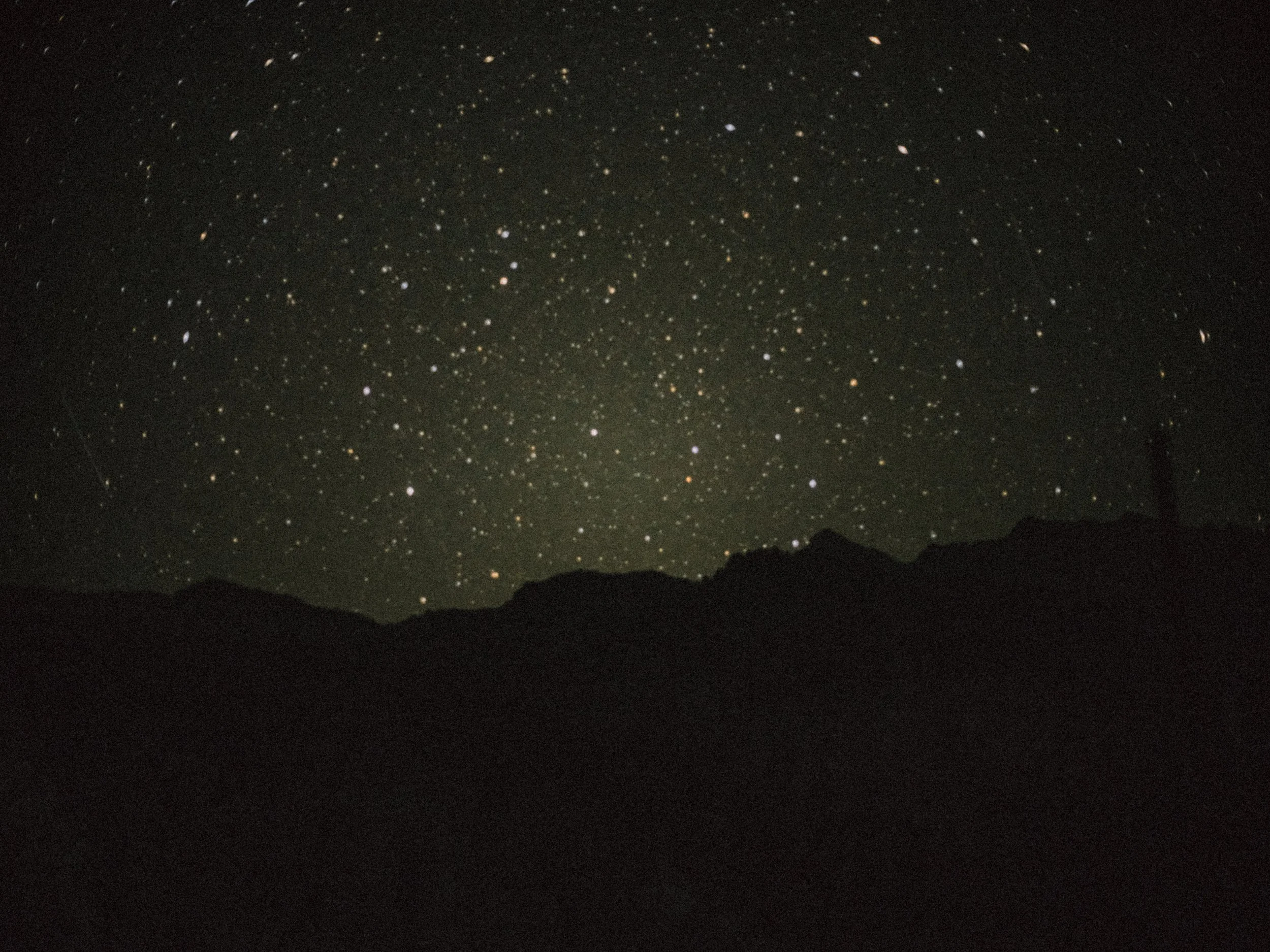
Photograph by Matty Feurtado
I am the son of Shahida Perveen.
Shahida: faithful witness.
Perveen: a cluster of stars, a whole constellation pressed into one woman.
Nobody told me that as a child. I learned it in the way she carried silence like a scar, in the way her hands shook over the stove as she stirred chai for a man who now existed only in photographs and stories. Faithful witness, star-cluster: not to men, not to the state, not to some brittle idea of respectability, but to what hurts and what survives anyway.
I was not raised by a patriarch. I was raised by a woman who had to become her own plural.
Shahida Perveen: father and mother and border patrol. A one-woman constellation trying to hold up a collapsing sky. My childhood is the sound of her keys at the door, the weight of the grocery bag cutting into her fingers, the way she would put her body between me and the world as if she were a wall made of flesh and prayer.
They say “broken home” like it’s a failure. I say: my home was a woman who refused to break.
The feminine in my blood is not soft pink; it is tendon and callus. It is my mother signing forms in languages she did not fully understand, trusting that Allah would translate the rest. It is her standing in government offices and school corridors, demanding things she’d been taught never to ask for: appointments, answers, dignity.
I have chosen a different path—Chitral’s stone streets, a studio full of wool and mountain air, work that makes no sense to bureaucrats—but the river under the road is hers. The patience is hers. The relentlessness, too. People say, Adil, how do you keep going? How do you keep doing what you do with so much clarity and focus, like you’re burning from the inside out?
They think it’s talent. It isn’t. It’s a form of prayer.
On my desk lie the prayer beads I stole from her bedside table years ago, half in jest, half in hunger. The thread is frayed now, the wooden beads darkened by other fingers. They have counted more of her dhikr than mine: millions of verses, repeated until they left grooves in the air. When I run the beads through my hand, I can hear the ghost of her whisper—SubhanAllah, SubhanAllah—like the track underneath everything.
Whatever “clarity” people see in me is just the scaffolding of those prayers. Whatever focus they admire is borrowed light—maybe that’s all Perveen ever was: a hidden constellation, lighting my work from behind.
Compassion, kindness, care, tenderness: these are the emblems stamped into every syllable of Shahida. This is the lineage I claim, even as I fail at it, gloriously, daily. I am impatient, brittle, sharp-tongued. I preach care and then forget to call her back. I speak of tenderness and then shut down, retreat into work, into wool, into diagrams of shepherd cloaks and exhibition plans. My mother, who stitched and unstitches her life to make room for everyone, is still teaching me what it means to stay.
This is the paradox: I come from a woman who built a life out of quiet mercy, and I’ve turned into someone who disrupts for a living. She absorbed shame so I could refuse it. She swallowed her words so I could spit mine into microphones and grant applications and artist statements, telling the world that another economy is possible, one made of wool and justice and slowness.
We were never taught to name this as power.
In the script of patriarchy, a son is supposed to grow up and replace the father, extend the line, inherit the chair at the head of the table. I have no interest in that chair. I am not here to become another man in another room deciding the fate of women who know more than he does. My inheritance is not a surname; it is Shahida Perveen, the faithful witness who learned to carry an entire night sky inside her and still get up for work in the morning.
She was the breadwinner, the disciplinarian, the one who fixed the leaking tap with sheer rage. She signed the housing forms. She stitched her heart into every packed lunch. She stood in for systems that were never designed for her—never designed for us—and she did it without medals, without language, without therapy.
If there is anything sacred about what I do now in Chitral—about documenting wool, sitting with elders, dreaming up schools and residencies and these fragile new architectures of care—it is because I watched one woman hack a new world out of the old one with nothing but faith and stubbornness.
Conflict and contradiction lie side by side in our story.
There are words between us that will never be said out loud. I know the sacrifices she made; she knows the places I carry wounds she cannot quite look at. We circle each other’s grief like pilgrims, never touching the innermost stone, and yet somehow we go home lighter. There is an unspoken witnessing that flows between us: a look across a room, a sigh down a phone line, the way she switches from asking when I’ll “settle down” to telling me to eat properly, sleep well, not work too hard.
I survive in Chitral because there is faith—hers braided with mine. Because on nights when the mountains close in and the river sounds like a warning, I remember the soundscape I was born into: her reciting verses over the hum of the fridge, the click of tasbih against a ceramic cup, the quiet way she re-arranged the furniture after every catastrophe, as if the room itself could be re-written.
Sometimes, standing in the studio, hands full of wool, I feel something move through me that is not entirely my own. A kind of knowing, older than my passport, older than my doubts. A sense that there are rooms I have not yet entered, valleys I have not yet walked in, and yet my soul recognises them, like familiar doorways seen in a dream.
Call it intuition. Call it ancestral memory. I call it Shahida Perveen: the faithful witness, the woman who raised herself into plural, the constellation that keeps emerging from places I have never been, insisting that another way of living is not only possible, but already here, pulsing under the skin of everything.
I am the son of Shahida Perveen. That is my first rebellion. That is my first prayer.