
Let It Disturb تحَمّل
The undeniable truth is this: perception is not a fact. It is weather. It shifts without warning. It arrives early, out of season, like the Arctic wind that has somehow been released in late March—sharp, unforgiving, impossible to negotiate with.
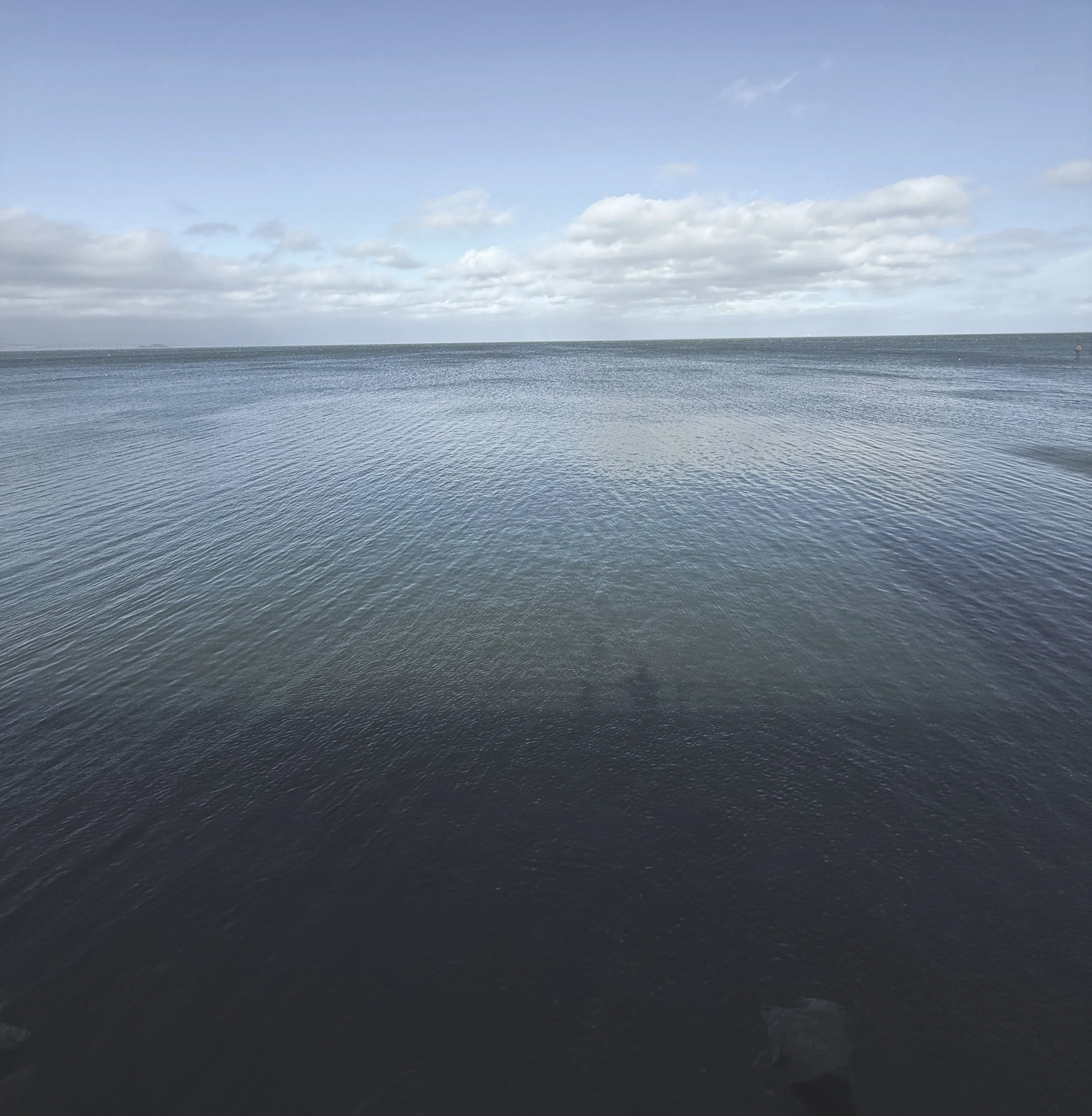
I write as I walk the Portobello promenade, my mouth filling with cold, salt, exhaust—each breath a small abrasion. The sea is grey, not romantic grey, but the grey of a mood you didn’t choose. The gulls have that Edinburgh arrogance, loud with ownership. Wind pushes through my coat as if it has a right to enter me. I pull my pakol down tighter, fixing it with the tenderness you give a thing that carries a history.
I still carry the remnants of my morning conversation with Ami—my mother’s voice lodged in the ribs. She reminds me, gently but with that unshakeable certainty, that the morning prayer matters. Essential, she says. As if prayer is not only a ritual but a rope you throw across the day, a way of not letting the world take you. I think of her for a few seconds longer than I meant to, the way you do with love—how it interrupts you, how it refuses to be scheduled. And then I’m back in my own body, in this city that taught me its rhythms when I was younger, when I had fewer names for what I was feeling.
Istanbul returns to me like a warm cloth. Ami visited for her 60th and for a brief time we both felt—strangely, powerfully—allowed. As if the city had room for her, for her modesty, for her laugh, for the particular way she holds herself in public: careful, dignified, not asking permission. In Istanbul we were part of the fabric; we did not feel like stains to be scrubbed out. The streets didn’t flinch at our presence. The call to prayer was not a controversy. It was simply air.
Edinburgh, after months away, meets me with familiar signals—distance, wind, that hard Scottish light that can make even kindness look strict. I realise, with a steadiness that almost surprises me, that I have grown out from this city. The East has captivated me, and that is the truth I can no longer soften. Not because it is better. Not because I am romanticising elsewhere. But because I have tasted what it is like to move through a place without being reduced to a question.
Here, my hat becomes an argument.
The pakol is made from endangered wool, shaped by hand, born from mountain economies and pastoral tenderness—the kind of object that holds labour, land, weather, lineage. It is also, to too many eyes, a shortcut. A symbol they have been trained to fear. A costume in their imagination for a “type” they already know how to punish. I have watched people’s gaze do the same quick work as a border guard: scanning, sorting, assigning risk. A man in a pakol—therefore suspect. Therefore foreign. Therefore violent, perhaps. Mujahideen, Afghan fighter, the old television images rehearsing themselves behind their pupils.
It is almost comical, if it weren’t so consistent.
A pakol is not far from a French cap. It is soft, rounded, practical. It belongs to cold places. It belongs to men who herd sheep and to boys who carry bread and to elders who sit in the sun and remember things. But resemblance does not save it. Because what disturbs is not the object—it is the narrative attached to it. The West has become masterful at categorising humans, at slotting bodies into camps as if identity is a file cabinet and there is comfort in organisation. It is a lifelong occupation, this sorting. A quiet bureaucracy of suspicion.
I used to flinch. I used to edit myself before the world could. A softer scarf, a different posture, a more careful version of my name. I learned, as many of us do, to make my presence more “readable” to those who believe they own the rules of legibility. But today something has changed, or perhaps it has simply hardened into clarity.
I am not flinched by it—surprisingly.
I have never been so proud of wearing my Chitrali pakol. I wear it with a calm that feels like refusal. I feel as if I carry the entire Hindukush on my head: its wild ridgelines, its stories, its wool, its grief, its defiance. A mountain is not an accessory. A mountain is a witness. And if a hat disturbs, if it irritates the eye, if it interrupts the comfort of those who prefer their “diversity” curated and harmless—then let it.
Let it disturb.
Let it irritate.
Let it expose the thinness of a tolerance that collapses the moment we look like ourselves.
The wind keeps coming. The sea keeps on its grey sermon. Portobello moves past me with its coffee cups and dog walkers and polite distance. And I keep walking, my pakol anchored against the weather, against the gaze, against the old demand to become smaller. Somewhere under all this cold, something fierce stays warm: the knowledge that I do not need to be understood to belong.
I belong anyway.