
The Sleeping Collection تپش
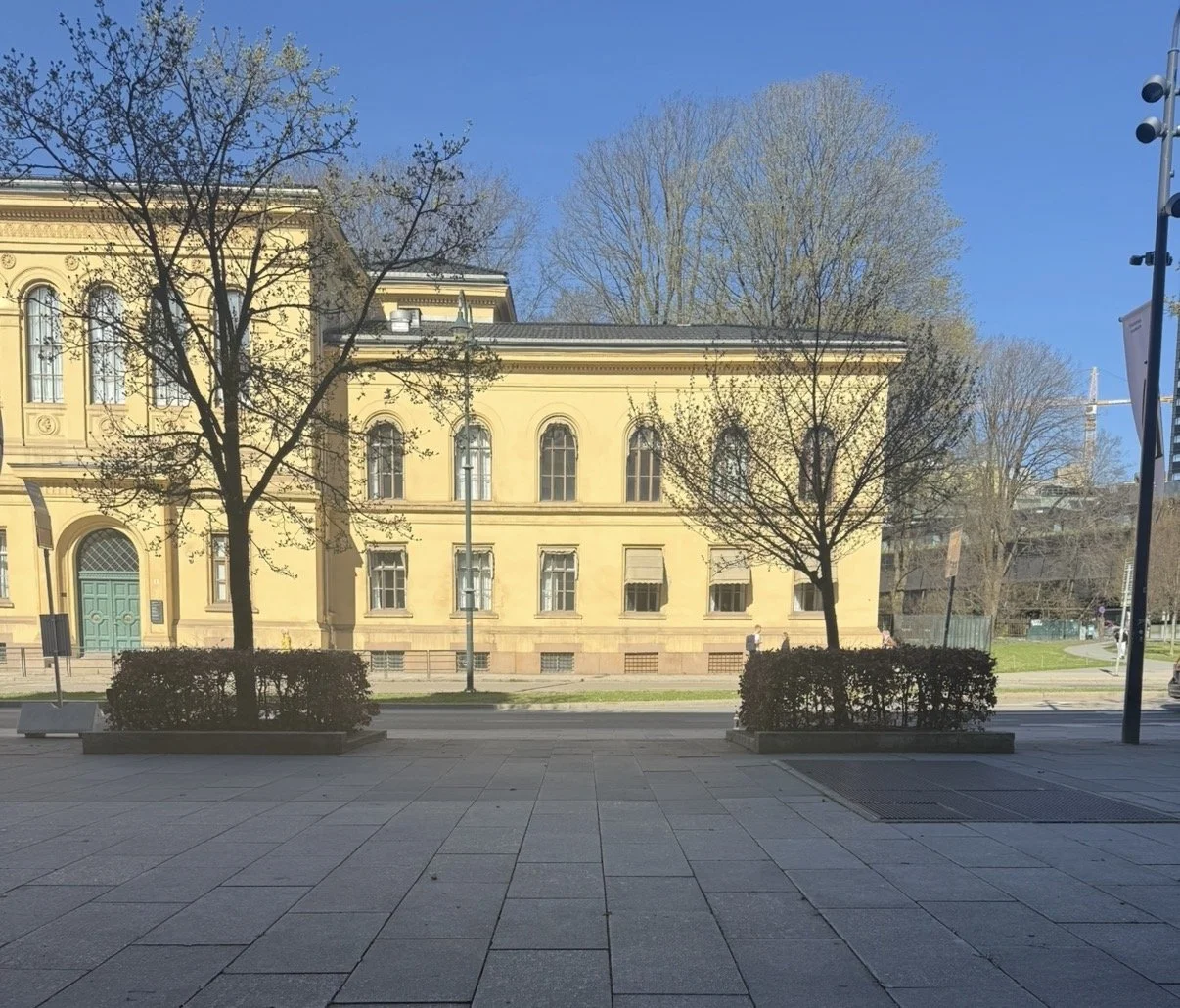
Yesterday I met Øivind, a senior anthropologist, at the Historical Museum in Oslo.
I did it. I sat there, in one of the wealthiest and most orderly countries in the world, speaking about Chitral, about Pakistan, about a sleeping collection of objects that the world has already half-forgotten. A small archive. A few traces. A handful of things left behind by Morgenstierne, the linguist-anthropologist, now buried somewhere in Norway under the polite dust of institutional stillness.
No one really understands the bridges a child of the diaspora must first burn, and then rebuild with his bare hands, in order to carry what he carries. To choose to return to something so heavy it could bury you. To embrace a history that has not only been neglected, but rendered irrelevant. To carry a region, a people, a material memory, when every signal around you says: this is redundant, this does not matter, no one is asking for this.
And perhaps that is precisely why I am fuelled by it.
Not because I am under any illusion that I will change the world in a single meeting, or in a single museum, or in a single life. But because I know what it means when something is left to sleep too long. I know what happens when a country is reduced to a headline, when a region is flattened into obscurity, when beauty survives only in the dark, unvisited forests of history.
The conversation with Øivind stayed with me not because it was dramatic, but because it was quiet. Painfully, tellingly quiet. It revealed to me, once again, how Pakistan is perceived, how Pakistan is held — or rather not held — in parts of the museum world. However much exciting work may be happening in Scotland or elsewhere in the UK, you arrive in Oslo and realise that in this setting, in this archive, Pakistan simply does not register with urgency. It does not carry enough contemporary relevance. It does not attract enough desire. It is not a country that institutions seem especially eager to animate.
I want to be generous and civil and say that perhaps Pakistan is also to blame, that perhaps its people, its scholars, its diasporas, should take more ownership. But then I am overtaken by rage. How many times must Pakistan rise before it is allowed to remain standing? Its people rise again and again, only to be ambushed by cruelty, betrayal, extraction — by the Pakistani state itself, and by international players who have long treated the country as a corridor, a battlefield, a warning, a strategic inconvenience, but rarely as a repository of brilliance.
And yet she breathes.
This is the part I cannot abandon. Pakistan continues to produce beauty. Not the polished beauty of branding campaigns or museum labels, but the difficult, half-buried beauty that survives in cloth, in gesture, in field memory, in songs, in mountain routes, in the dignity of makers whose names rarely enter the archive. I know this because I am made of that world. I am a product of that space. I witness it, I live it, I carry it daily. My body remembers what institutions forget. The sounds and colours of that world are etched into me, not as nostalgia, but as wound, inheritance, and proof.
This is not about saying one country is better than another. It is not about easy binaries — Europe and elsewhere, archive and field, Norway and Pakistan. It is about what happens when the complexity of your grief, the contradictions of your existence, the fullness of your world, goes unrecognised. What do you do when the things that formed you do not appear legible to the places that claim to preserve human history?
Morgenstierne’s collection is sleeping in Norway. That was the phrase, more or less. Sleeping. We spoke a little about reactivating it. We circled the possibility. But there were moments of deep silence between us — not empty silence, but the kind that gathers when two people can almost see the shape of what could be done, and at the same time understand the architecture of everything that prevents it. We both knew the constraints. The tyranny of relevance. The way institutional energy follows fashion, politics, funding streams, strategic importance. Pakistan is nowhere in that wave. Chitral is nowhere to be found. It is a world considered too minor, too remote, too unsellable. Not worth the labour.
And still, something passed between us.
Øivind spoke of his trip to Peshawar in the 1990s, and the impression it left on him — extraordinary, he said. A place he loved. I was in Peshawar in early January. And suddenly, sitting in that café-space of the museum, in Oslo, I felt the strange folding of time and geography. A Norwegian anthropologist remembering Peshawar. Me, freshly returned from it. Both of us held for a moment by a country that continues to exceed its own ruin.
I thought of you, Pakistan. I carried you with me. Even there.
The truth is, I changed the narrative a long time ago. Or perhaps I refused the narrative that was waiting for me. I am no longer interested in rehearsing only damage, only disaster, only pity. I speak instead of aesthetic intelligence, of elevation, of beauty, of cloth, of shepherds, of archives, of tenderness. I insist on celebration not because I am naive, but because I know how hard-won it is. I know celebration can be a method of refusal. A politics. A form of witness.
It is possible because I am that person.
I am the one who returns.
The one who remembers.
The one who carries what should not have been left behind.
The one who knows that even if the archive sleeps, the material has not died.